

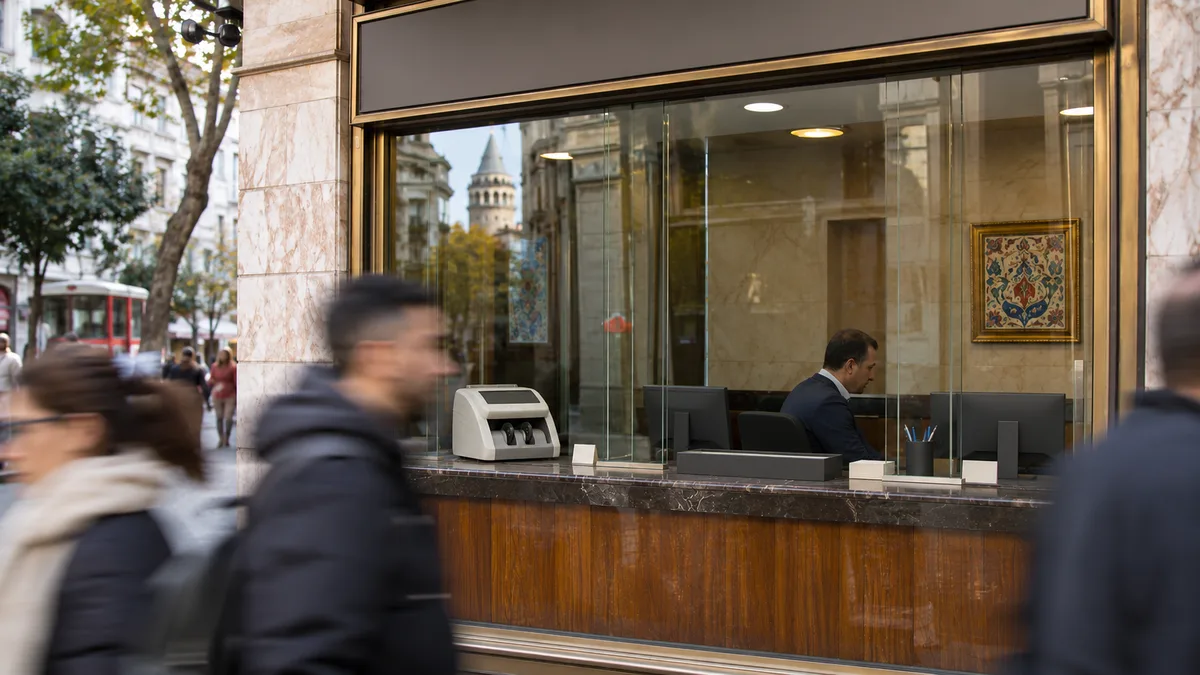
The rates displayed at Turkey’s exchange counters describe a transaction with an immediate purpose: exchanging one currency for another. A visitor may sell euros for Turkish lira, while a resident may buy dollars for an overseas expense. The counter quotes separate buying and selling rates, with the difference forming its spread. Those signs reveal the cost of conversion at that business, at that moment. They do not show every price, participant or contract involved in the wider currency market. Even nearby counters can offer different rates because their costs, currency holdings and commercial decisions differ.
Searches for what is forex trading often begin with this familiar exchange-counter experience. Currency conversion lets a buyer pay in a different currency. In a speculative trade, the exchange rate itself is what the trader hopes to profit from. Conversion supplies money needed for spending, saving or payment. Speculation involves taking exposure to an exchange-rate movement in the hope of making a profit. Some transactions involve actual currency balances, while others use contracts whose value changes with an exchange rate. A position linked to the dollar and lira therefore does not necessarily place spendable dollars in an account. The instrument determines what is owned, what must be paid and how any gain or loss is calculated.
Beyond the counter, businesses and financial institutions exchange currencies for reasons that have little to do with predicting tomorrow’s price. Turkish importers may need foreign currency to settle invoices, while exporters may convert overseas receipts into lira. Banks manage currency requirements arising from customer payments and their own operations. Investment flows create further demand when funds move between assets denominated in different currencies. These activities meet through a market spread across institutions and trading venues rather than a single worldwide exchange with one universal price. A retail cash quote and an institutional electronic quote can consequently differ without either being an error.
Timing makes the distinction clearer. An exchange counter usually prices a conversion for completion under its stated terms. A forward contract instead fixes an exchange rate for a transaction on an agreed future date, subject to its contract conditions. Such arrangements can help businesses make future payment costs more predictable, although they can also prevent participation in a later favourable rate movement. Discussions around what is forex trading need to account for these different purposes and settlement arrangements. A company arranging dollars for an invoice due in several months faces a different problem from a speculative position opened and closed during the same afternoon.
For comparisons in Turkey, the direction of the quote matters as much as its size. A USD/TRY rate expresses the number of Turkish lira per US dollar, so a rise means more lira are required for each dollar. At a counter, the applicable rate also depends on whether the business is buying or selling that currency. Buying at the ask and selling at the bid can cost money even when both quotes stay put. Some products also charge a commission or a fee for keeping a trade open. With leverage, a trader puts down only part of the trade’s value. Gains and losses are based on the full position, so even a small move can mean a sizable gain or loss relative to the deposit. A narrow displayed spread alone says little about the full cost or risk. Before prices can be compared meaningfully, the currency direction, transaction amount, settlement terms and instrument all need to match.